Herkimer Diamond History and Heritage

American Geode

Now the source and formation of Herkimer Diamonds is of particular interest to us here at American Geode because the Herkimer Diamond was formed in “pockets” not unlike the pockets that formed geodes. Most quartz crystals grow, over the course of millions of years attached to a matrix, attached to the surrounding rock or stone. So in those formations only one end of the quartz crystal grows to its point. With Herkimer Diamonds forming inside pockets, freed from the surrounding matrix stone, they grow points on both ends.

The Herkimer Diamond began forming nearly 500 million years ago in pockets within a sedimentary rock called Dolostone (Dolomite and Limestone). Sedimentary rock, different from its two cousins Igneous rock and Metamorphic rock, is formed by layers of mineral and organic matter under hundreds of million years of pressure. As more layers of mineral and organic matter are deposited, this increases the pressure and weight on the lower and earlier layers of sedimentary rock below. The Dolostone covered Herkimer County during the Cambrian Age, when Herkimer County was also the bottom of the sea that spanned across North America.

Now this is the part of the Herkimer Diamond formation that is similar to the way geodes are formed: organic material, plants and sea life would die and be buried under new layers of sedimentary stone. When these plants and other sea life would decompose under the rock, they release gases, and this gas is what formed the “pocket.” Evidence of this organic, plant material succumbing to decomposition is clear when you see the black shiny flakes of Anthraxolite that surround or leak from these pockets. Anthraxolite is a carbon compound and by-product formed when organic material breaks down.

So as the organic material decayed and broke down it became a gas, trapped below layers of sedimentary stone. Air creates its own pressure inside a substance, so the air pressure was carving out its own cavity from the inside out. These air pockets became the pockets we rockhounds discover as we crumble, break, and peel away layers of the dolostone. Over the course of 200-250 million years the layers of sedimentary rock increased and grew, and this increased the pressure and heat on the buried dolostone. Also inside each of these air pockets were various quartz and carbon elements and other compounds “feeling the heat” from being buried below layers of sedimentary rock.

Under this pressure of the sedimentary layers of rock, and the ensuing heat, the quartz and other compounds inside these pockets began to transform themselves. Finally, over the course of 300 million years, the glaciers that sat atop Herkimer County began to melt, and washed away layers of the sedimentary rock, and allowed the compounds and elements inside these pockets to cool down and then crystallize.

An important question to answer right now is “why are the Herkimer Diamonds double-terminated?” The answer is that quartz does not adhere to the dolostone, therefore the quartz trapped inside these air pockets did not attach to the surrounding matrix host stone. The process left the quartz crystals free to fully crystallize unattached and allowed both of the ends to grow into fully terminated points. Many Herkimer Diamonds are found as clusters attached to one another. They adhered to one another during their crystal growth formation, but again did not adhere to the dolostone interior of the air pocket. The value of Herkimer Diamonds is determined by size and their opacity or translucence. The larger and more translucent Herkimer Diamonds are worth more to a collector or jeweler than the smaller opaque specimens. Knowing the history and background of the Herkimer Diamond however lends a premium in our opinion when you are considering adding Herkimer Diamonds to your collection. They are not commercially mined due to various New York state laws limiting mining in the state, and most of Herkimer County is being used today by happy grazing cows, sugary apple orchards, tart cherry trees, farms of squash, cabbages and onions, and wine grapes. We have recently gained access to heretofore unmined and barren acres in the Herkimer County area on the same geologic slope and ledge as the traditional Herkimer Diamond mines. We are in consultation right now with the owner about constructing a pole-barn over this new Herkimer mine so we can mine year-round.
Santa Cruz Gem, Mineral, Fossil and Jewelry Show in April!

Jewelry Show
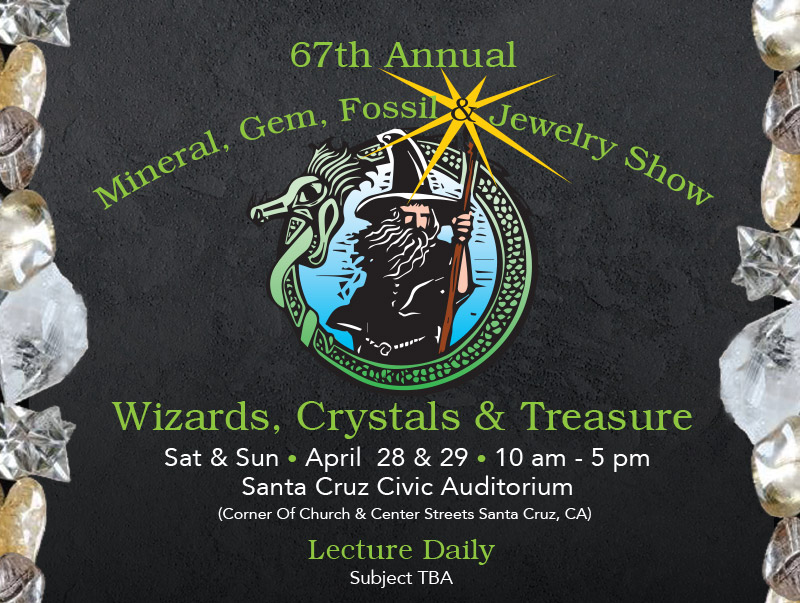
Mineral, Gem, Fossil and Jewelry Show
67th Annual Mineral, Gem, Fossil and Jewelry Show
Wizards, Crystals & Treasures
Sat & Sun • April 28 & 29 • 10 am – 5 pm
Santa Cruz Civic Auditorium
Lecture Daily

Activities for All Ages
Gold Panning, Kids crafts, Rocks that GLOW Treasure Hunt (score wizard crystals treasure!) and Geode Cutting

Demos
Cabochon making, Arrowhead Knapping and Hands on Soapstone Carving

$6 Admission, Children under 12 & Scouts in Uniform Free
$1 Off With A Printout Of The Flyer
Mineral, Gem, Fossil and Jewelry Show

American Geode Info
Does your gem, mineral or fossil club or society need new members in your ranks? How about new guests to your gem, mineral and fossil shows? Would you like rockhounds and gem, mineral and fossil enthusiasts to travel across state lines to visit your show? Would you like exponentially more traffic to your club’s homepage or the show’s homepage?

American Geode can help. Between 3000 and 10000 rockhounds and gem, mineral and fossil enthusiasts visit our website each month. They also contact us for suggestions on clubs to join, and shows and events to attend.

Other mineral websites charge between $600 to $1000 per year for a banner ad on their site.

We charge a flat rate of $150 for 12 month basic partnership and offer much more than other mineral sites. Send us two banner ads, 728×90 and/or 150×150, that we will post on our website. As an add-on service, send your club announcements and show announcements for us to post over our famous American Geode Twitter with 10,000+ rockhound followers, fans and friends.

The benefits to you and your club are that you will raise higher in the Google ranks when someone searches for gem and mineral clubs, and gem and mineral shows. You will also view many more visitors to your site, soliciting information about how to join your club, download your member application form, and visit your shows.

Gilsum Rock Swap and Mineral Show 2018

Mineral Show
Mineral Show
Mineral Show

Gilsum Rock Swap and Mineral Show, sponsored by the Gilsum Recreation Committee, attracts thousands of rock and mineral enthusiasts from across the country each year. The event, known for its scenic location and small-town hospitality, will take place on the weekend of June 23-24, 2018 at the Gilsum Elementary School & Community Center, 640 Route 10 in Gilsum, NH. All monies raised by this event go to community recreation programs. Admission is free, although we do accept donations.

This year’s event includes a special presentation by mineral hunter and geologist Nancy Swing. Don’t miss “Rock-Hounding in New England,” Saturday at 1:00 PM in the auditorium, when she will share her own experiences rock hunting at key sites in the Northeast. Swing is the owner of Natures. She began collecting at the age of three, and is a regular speaker at rock and gem shows. This presentation is free.

Other events include our annual ham and bean dinner with homemade pies, a chicken barbecue, and panning for minerals for the kids.
Show Schedule: Saturday
8 AM Exhibits open

8 AM – Noon: Wholesome Foods Breakfast
10 AM – 2PM: Library books sale at the Library

1 PM: SPECIAL PRESENTATION: Speaker to be determined.

4:45 PM: Annual Ham & Bean Dinner with homemade beans and pies! Three seatings beginning at 4:45, 5:45 and 6:45 PM at Gilsum Congregational Church. Tickets on sale at the Rock Swap Central information booth all day and at the church at meal time.
6 PM: Dealer exhibits close

Sunday
8 AM: Exhibits open
8 AM – Noon: Wholesome Foods Breakfast
Noon – 2 PM: Chicken Barbecue
10 AM – 2 PM: Library book sale 10:00 – 2:00 at the Library
4:00 PM: Show closes – See you next year!
Visit us on Facebook at GilsumRockSwap, where you will find photos from last year’s show, announcements for this year’s event and more!

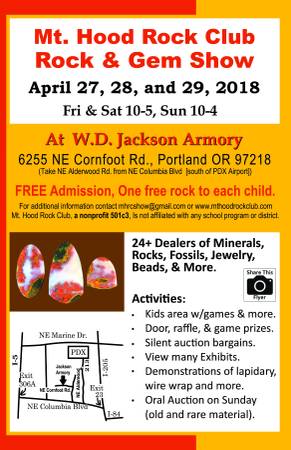
Mt. Hood Rock Club Rock & Gem Show April 27, 28, and 29, 2018

Gem Show


Gem Show
Gem Show
Mt. Hood Rock Club Rock & Gem Show
April 27, 28, and 29, 2018
Fri & Sat 10-5, Sun 10-4

At W.D. Jackson Armory
6255 NE Cornfoot Rd., Portland OR 97218
(take Alderwood Rd. from NE Columbia Blvd [south of PDX Airport])

FREE Admission, One free rock to each child.

Mt. Hood Rock Club, a nonprofit 501c3, is not affiliated with any school program or district.

24+ Dealers of Minerals, Rocks, Fossils, Jewelry, Beads, & More
Activities:
– Kids are w/ games & more.
– Door, raffle, & game prizes.
– Silent Auction bargains.
– View many Exhibits.
– Demonstrations of lapidary, wire wrap and more.
– Oral Auction on Sunday (old and rare material).

Be sure to check out American Geode’s collection of gems, minerals, rough stones, stone artwork, and other mineral ones-of-a-kind for auction in our ebay marketplace: https://www.ebay.com/usr/americangeode

Carbondale Fern Fossil Site – CLOSED

Carbondale had an area, site of former strip mining, that still had piles and heaps of shale and slate that contained fern fossils. American Geode has the good fortune of discovering this site back in 2015 and recovered many fern fossils for our clients in academia, for our collector clients and for donation to the gem, mineral and fossil societies to which American Geode belongs.

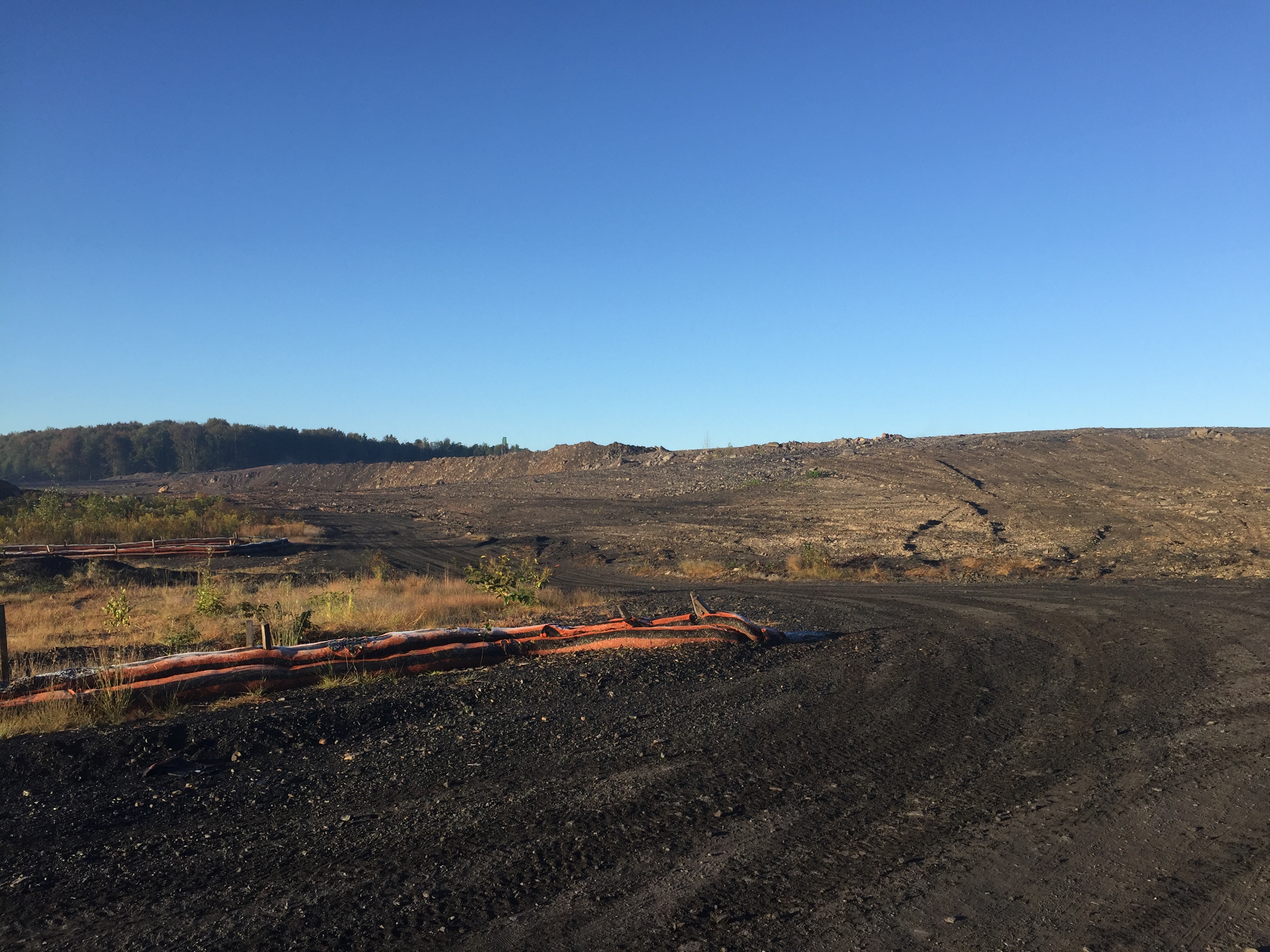
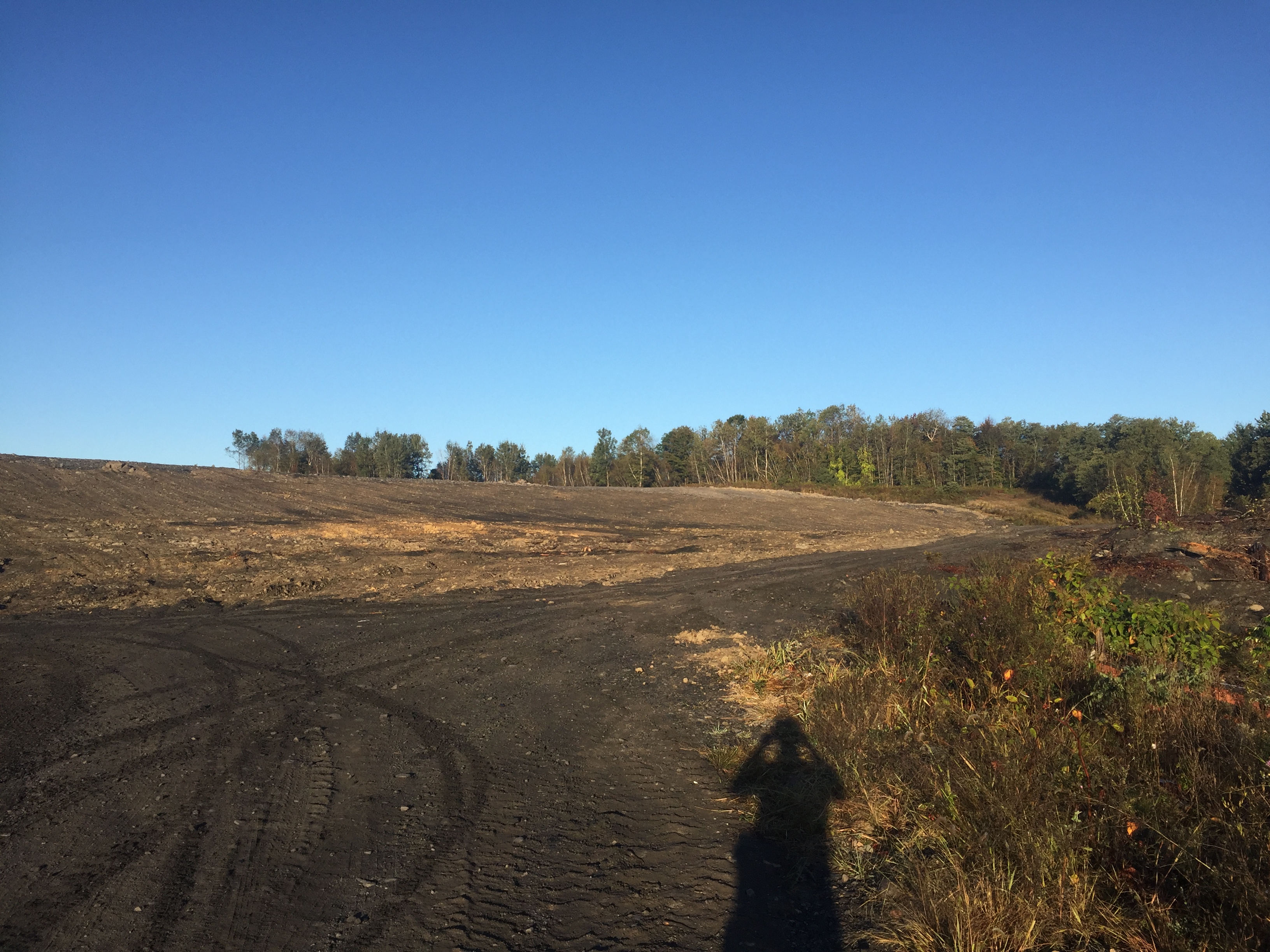
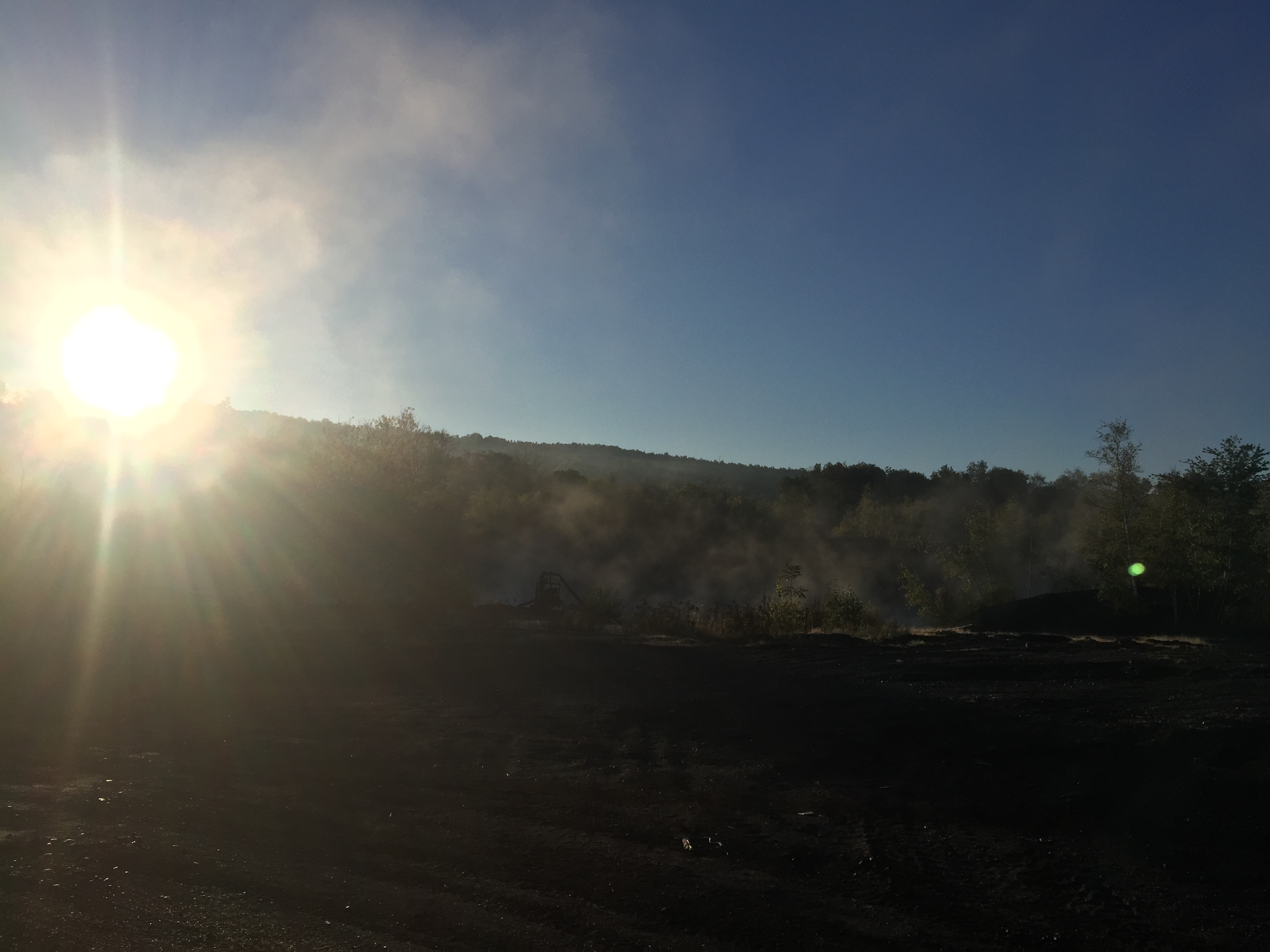
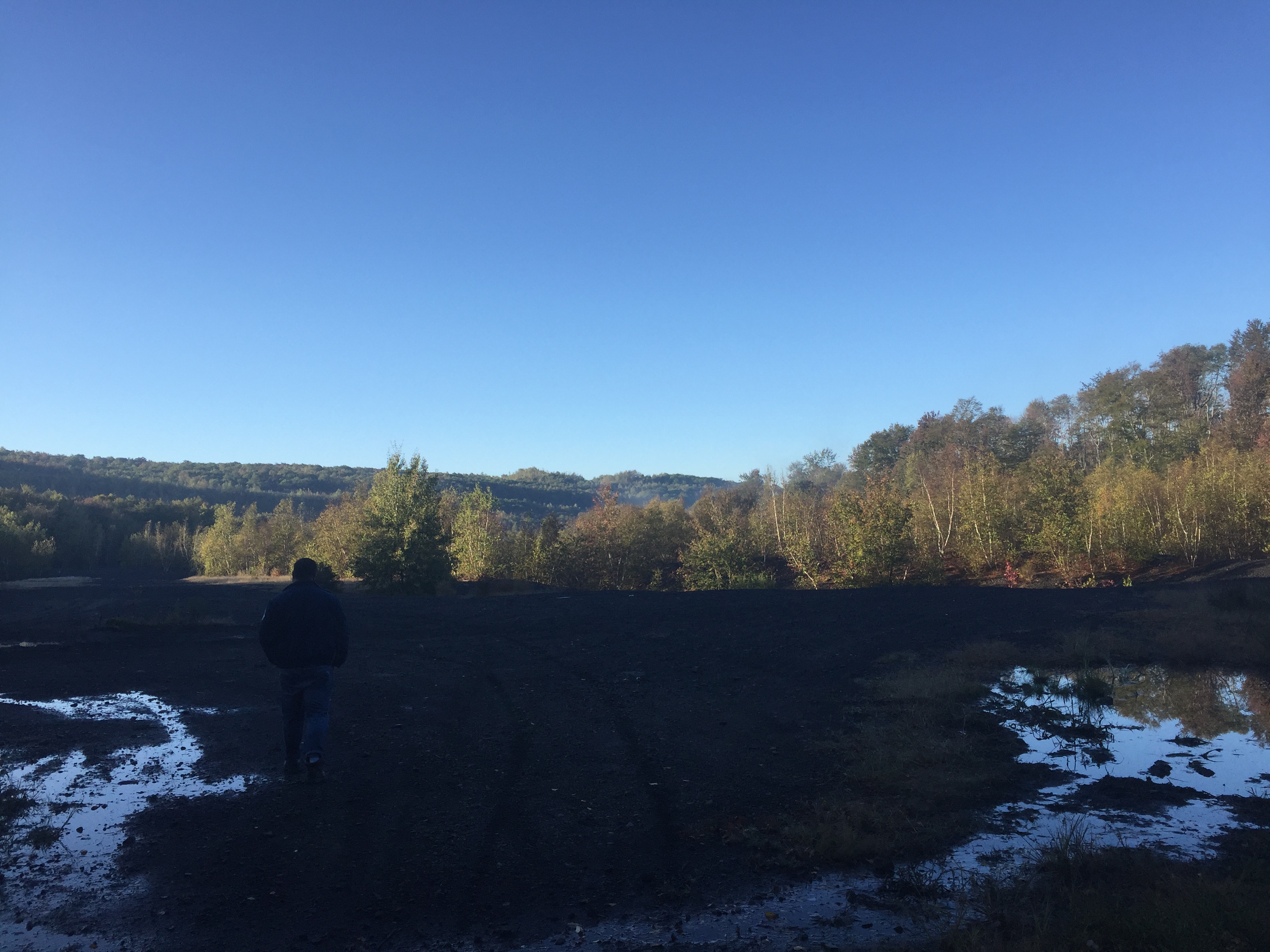
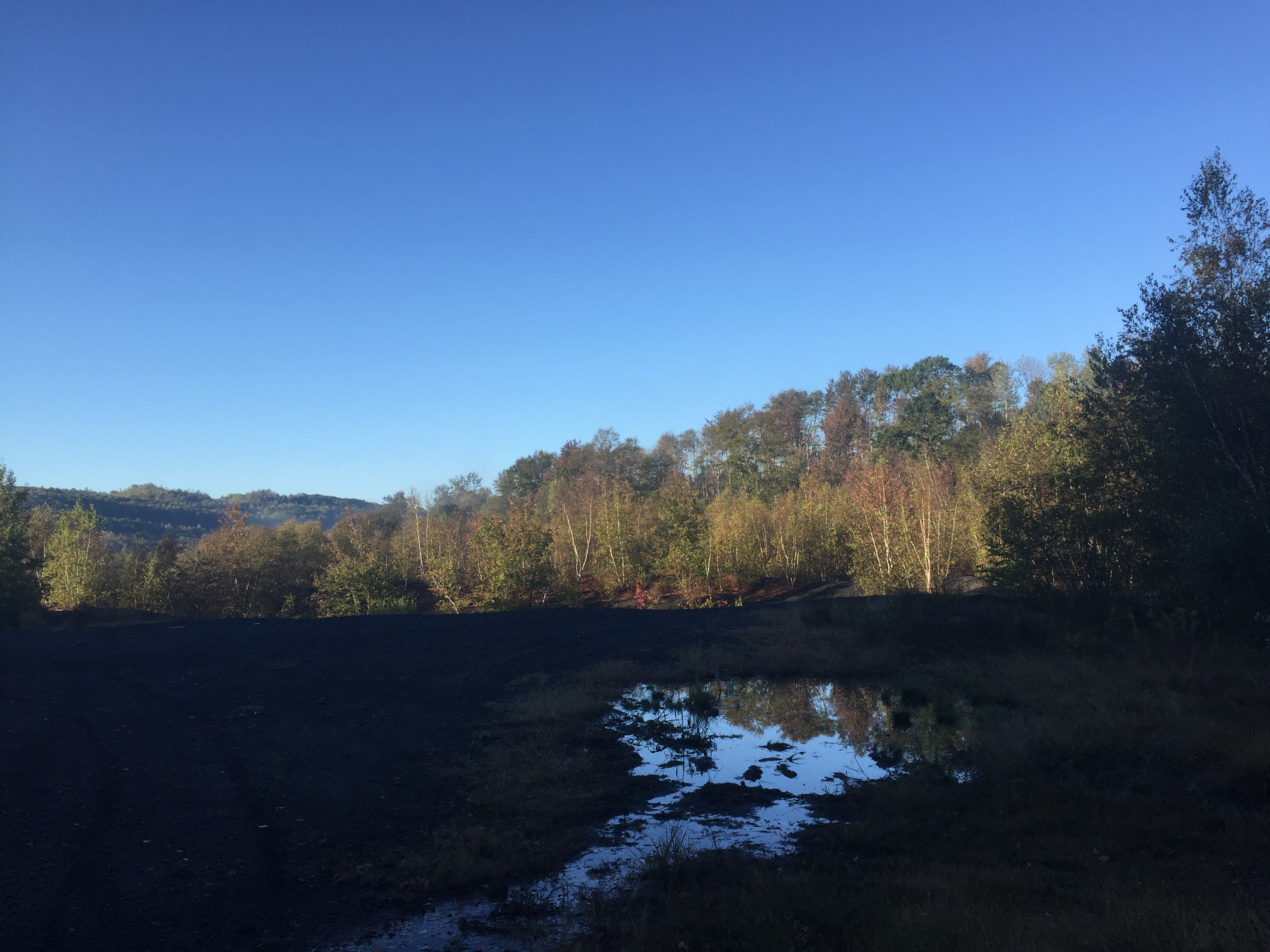
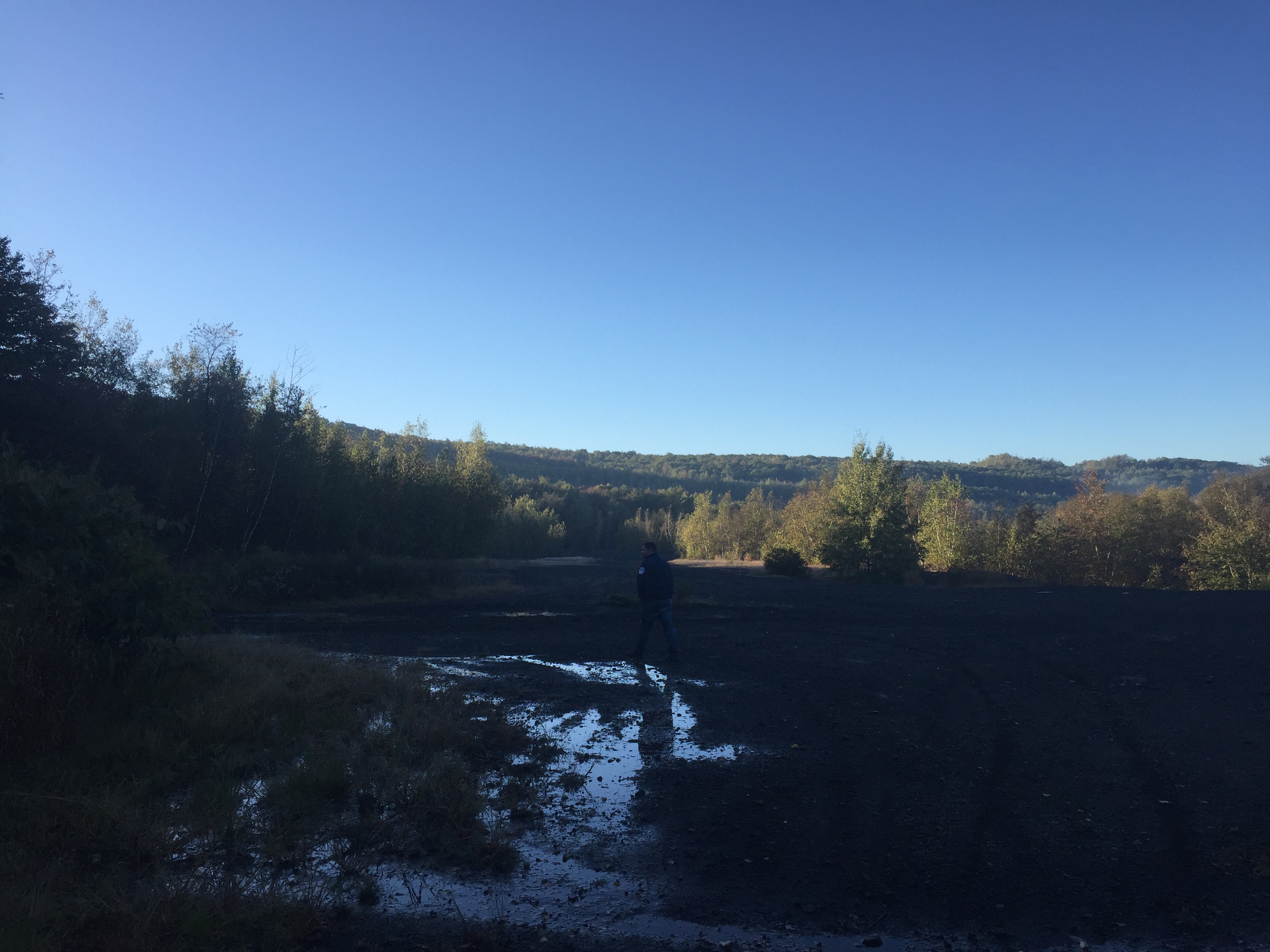
American Geode are very sad to report that this fern fossil site is now CLOSED and OFF-LIMITS. We returned to the site and saw a large sign declaring that this was a Pennsylvania State Mine Reclamation Project, and as we walked around, we saw no more hills, no pilings, no mounds. Everything was razed. The site was closed, off limits, we could see the tracks from heavy equipment that bull-dozed over the pilings and fossil mounds; this fern fossil site is gone. We took some photos of the now desolate and closed Carbondale fern fossil site, and American Geode still has some of these fossils in our inventory available for studying or purchase:
Name: Fern Fossils and Tree Branches
Fern Species: Alethopteris
Location: Carbondale, Pennsylvania, U.S.A.
Time: Pennsylvanian Sub-period, 320-290 million years old
Llewellyn Formation
https://www.ebay.com/usr/americangeode
Carbondale fern fossils 1

Carbondale fern fossils 2

Carbondale fern fossils 3

Carbondale fern fossils 4

Carbondale fern fossils 5

Carbondale fern fossils 6